
The cryptocurrency landscape has undergone a seismic shift over the last eighteen months, with few assets demonstrating as much resilience and evolutionary potential as XRP. Following the definitive conclusion of the SEC v. Ripple legal battle in August 2025, the narrative surrounding the XRP Ledger (XRPL) has pivoted from regulatory survival to institutional utility. For investors and traders, conducting a robust XRP price analysis now requires looking beyond mere chart patterns; it demands a deep dive into the integration of the RLUSD stablecoin, the expansion of Ripple’s cross-border payment corridors, and the macro-financial currents driving adoption.
As of early 2026, XRP finds itself at a crucial technical and fundamental juncture. Having retreated from its mid-2025 highs, the asset is currently consolidating in a zone that many analysts believe could serve as a launchpad for the next phase of the market cycle. This article provides a comprehensive breakdown of the factors influencing XRP’s value, including its tokenomics, the burgeoning role of stablecoins on the ledger, and the realistic price targets set by major financial institutions.
The Post-Lawsuit Era: Regulatory Clarity Established
For years, the price of XRP was heavily suppressed by the cloud of regulatory uncertainty. The watershed moment arrived in August 2025, when the legal dispute with the U.S. Securities and Exchange Commission (SEC) effectively concluded. Ripple agreed to a settlement of approximately $125 million—significantly lower than the regulator’s initial demands—and the SEC withdrew its remaining appeals. This victory cemented XRP's status: it is not a security when traded on secondary markets.
This clarity has been the primary driver for renewed institutional interest. Unlike many other altcoins that still face potential enforcement actions, XRP now possesses a distinct legal moat in the United States. This "regulatory safety" has allowed major custodians and financial institutions, such as BNY Mellon and Standard Chartered, to openly explore integrations with the XRP Ledger without fear of retroactive litigation.
RLUSD and the Evolution of Utility
Perhaps the most significant fundamental development for the ecosystem is the launch and integration of Ripple USD (RLUSD). This USD-pegged stablecoin was designed to complement XRP in cross-border settlements, not replace it. By offering a stable bridge asset, Ripple aims to capture a larger share of the global remittance market, which requires deep liquidity and low volatility.
How RLUSD Impacts XRP Price
Critics initially feared that a stablecoin might render XRP obsolete. However, on-chain data suggests the opposite. RLUSD utilizes the XRP Ledger for a significant portion of its issuance (alongside Ethereum), driving network activity. More importantly, XRP continues to serve as the "bridge currency" for less liquid fiat pairs. While RLUSD handles USD-denominated corridors, XRP remains the most efficient vehicle for bridging exotic currency pairs (e.g., PHP to MXN) where direct stablecoin liquidity may be fragmented.
Furthermore, the automated market maker (AMM) functionality on the XRPL allows XRP holders to provide liquidity to RLUSD/XRP pools, earning yield and locking up supply. This creates a supply sink mechanism that can alleviate sell pressure during periods of high network utilization.
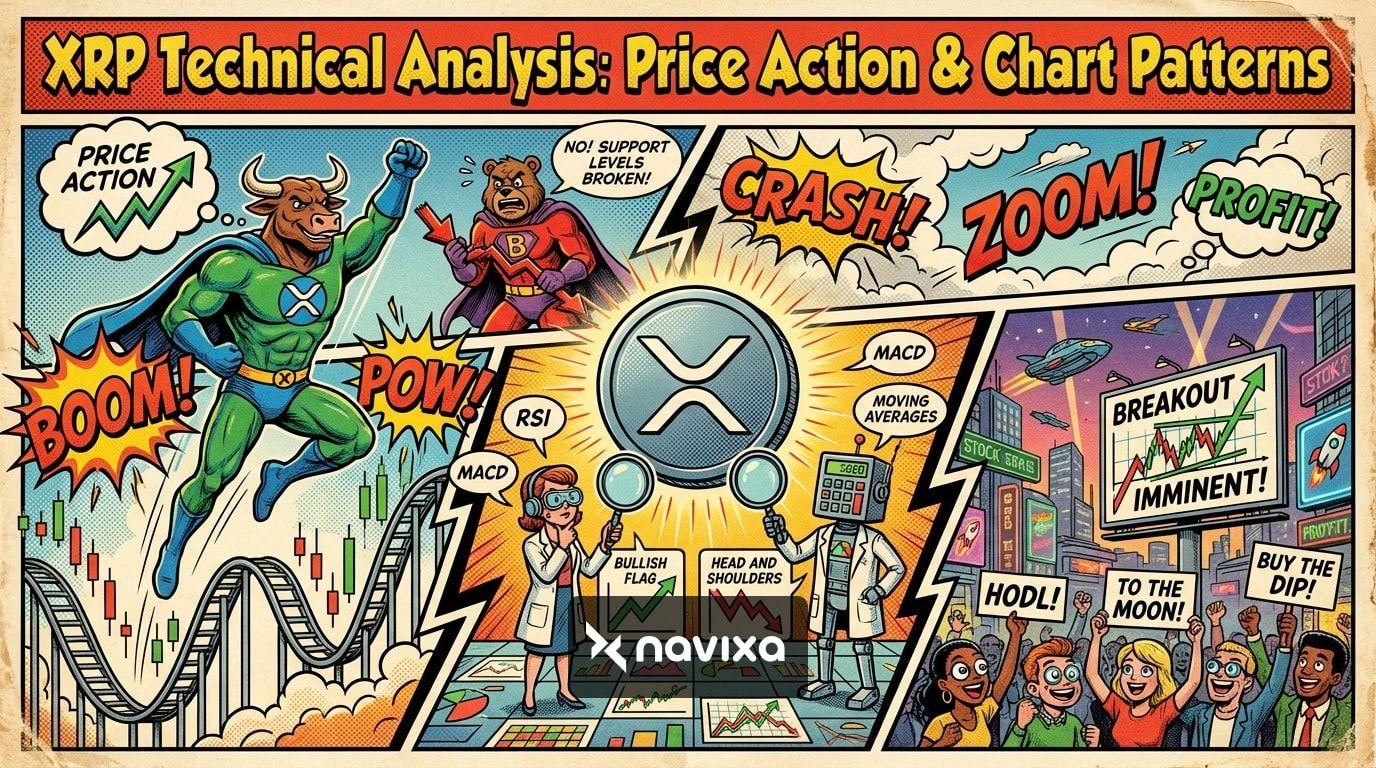
XRP Price Analysis: Technical Outlook for 2026
The technical structure of XRP in early 2026 reflects a market in consolidation. After touching highs near $3.65 in July 2025, the asset has corrected, currently trading in the $1.60–$1.75 range. This pullback is viewed by technical analysts as a healthy retracement following the post-settlement euphoria.
Key Support and Resistance Levels
Traders are closely monitoring the $1.50 psychological support level. A sustained hold above this zone suggests that long-term accumulation is taking place. On the upside, the $2.00 mark remains a formidable resistance. A clean breakout above $2.00, accompanied by increasing volume, would confirm a trend reversal and potentially open the door for a retest of the $3.00 region.
Momentum indicators such as the RSI (Relative Strength Index) on the weekly timeframe have reset to neutral territory, indicating that the market is no longer overextended. This neutrality often precedes significant volatility, making risk management essential for short-term traders.
Institutional Adoption and ETF Drivers
The prospect of a U.S. Spot XRP ETF remains a primary catalyst for future price appreciation. Following the launch of XRP ETFs in Canada and Brazil in mid-2025, pressure has mounted on U.S. regulators to follow suit. Market data from CoinMarketCap indicates that assets under management (AUM) for these international products have grown steadily, proving institutional demand.
Leading asset managers have filed applications, and prediction markets currently price the odds of a U.S. approval in 2026 at over 80%. An ETF approval would likely trigger a supply shock, as issuers would be required to hold physical XRP to back their shares, removing liquid tokens from circulation just as they did with Bitcoin.
Strategic Partnerships in 2026
Beyond ETFs, Ripple has aggressively expanded its footprint in the Middle East and Asia. Recent collaborations with Saudi Arabian financial entities, aligned with the Vision 2030 initiative, highlight the region's appetite for blockchain-based settlement. Additionally, the integration of custody solutions with global banking giants ensures that the infrastructure exists to support large-scale institutional holding of XRP.
Tokenomics and Supply Dynamics
Understanding XRP price analysis requires a firm grasp of its unique tokenomics. Unlike mining-based assets, XRP is pre-mined with a maximum supply of 100 billion tokens. However, the circulating supply is managed through a system of escrow accounts.
Key Stat: Every month, 1 billion XRP are released from escrow. Historically, Ripple has returned the vast majority (often 70-80%) of this release back into new escrow contracts, limiting the actual inflationary impact on the market.
Furthermore, the XRPL employs a burn mechanism where transaction fees are destroyed rather than paid to validators. While the deflationary rate is currently low due to low fees, a significant spike in network adoption—driven by RLUSD transfers or DeFi activity—could accelerate the burn rate, exerting upward pressure on price over the long term.
Comparison: XRP vs. Competitors
To better understand XRP's value proposition, it is helpful to compare it against other networks vying for the cross-border payment and settlement sector. The table below highlights key differences in speed, cost, and institutional focus.
| Feature | XRP (XRPL) | Solana (SOL) | Stellar (XLM) | SWIFT (Traditional) |
|---|---|---|---|---|
| Primary Use Case | Cross-Border Settlement | DeFi & Consumer Apps | P2P Payments & Unbanked | Bank Messaging |
| Transaction Speed | 3-5 Seconds | 0.4 Seconds | 3-5 Seconds | 1-5 Days |
| Transaction Cost | <$0.0002 | <$0.00025 | <$0.00001 | $10 - $50+ |
| Regulatory Status (US) | Classified Non-Security | Pending Clarity | Generally favorable | Fully Regulated |
| Institutional Focus | High (Banks/Govts) | Moderate (Hedge Funds) | Moderate (NGOs/SMEs) | High (Incumbent) |
Risks and Challenges Ahead
Despite the bullish outlook, investors must remain cognizant of potential risks. The primary challenge remains market competition. While XRP was a pioneer in fast settlement, newer Layer-1 blockchains offer similar speeds with arguably more robust smart contract ecosystems. Ripple must continue to innovate with features like the EVM sidechain to attract developers, not just bankers.
Additionally, macroeconomic factors cannot be ignored. A strengthening U.S. dollar or a global recession could dampen demand for speculative assets, including crypto. However, XRP’s utility in lowering the cost of money movement may provide a hedge against economic contraction, as businesses seek efficiency above all else.
Conclusion: The Path to $3.00 and Beyond
The XRP price analysis for 2026 reveals an asset that has matured significantly. The end of the SEC lawsuit was not just a legal win; it was a green light for global finance to embrace the XRP Ledger. With the successful rollout of RLUSD, Ripple has diversified its product suite, ensuring relevance in a stablecoin-dominated future.
For traders and long-term holders, the current consolidation period offers a strategic opportunity to assess positions. If the anticipated U.S. ETF approval materializes and institutional adoption continues its current trajectory, price targets of $3.00, $5.00, and potentially the $8.00 mark forecasted by institutions like Standard Chartered become mathematically plausible. As always, market participants should prioritize risk management and stay informed on regulatory developments.