
Introduction
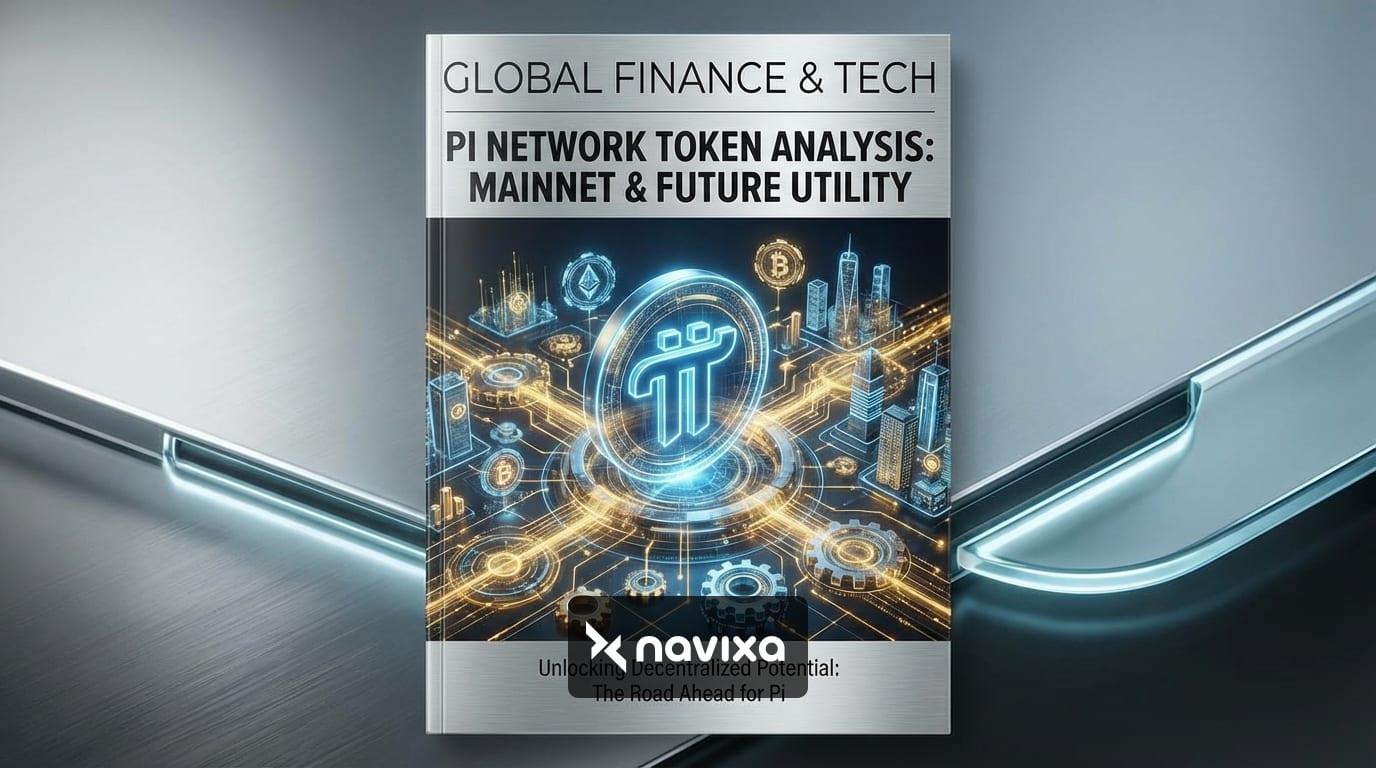
When analyzing the evolution of mobile-first cryptocurrencies, a thorough Pi Network token analysis is essential to understanding one of the most widely debated projects in the blockchain space. For years, skeptics dismissed the network as a mere social experiment—a mobile app where users simply clicked a button once a day to earn virtual points. However, the narrative has shifted dramatically. Following its transition to a fully operational layer-1 blockchain, the project has proven that grassroots token distribution can successfully evolve into a decentralized, utility-driven economy.
Now that the enclosed phase is a thing of the past, traders, investors, and developers are closely examining the fundamental value of the PI token. With real-world market capitalization data, active exchange listings, and a rapidly expanding developer ecosystem, Pi Network is no longer a speculative future concept—it is a live digital asset. This comprehensive review will explore the network's monumental mainnet launch, its current price performance, the introduction of smart contracts, and the actionable trading strategies you can employ in today's market.
The Journey to Open Mainnet: A Historic Transition
The definitive turning point for the ecosystem occurred on February 20, 2025, when Pi Network officially launched its Open Mainnet. This historic event dismantled the firewall of the Enclosed Network, allowing external connectivity and transforming PI from an isolated, non-transferable asset into a fully tradeable cryptocurrency.
The sheer scale of this transition is unprecedented in crypto history. Transitioning millions of users required the development of a bespoke, decentralized Know Your Customer (KYC) solution. To date, the network boasts over 17.7 million KYC-verified "Pioneers" who have successfully migrated their balances to the mainnet. This massive compliance effort relied on a decentralized workforce of over 1.09 million human validators who completed an astonishing 526 million successful validations—a feat that recently resulted in validators receiving millions of PI in decentralized rewards.
By unblocking millions of accounts previously stuck in compliance reviews, the open network phase has created a massive, legally compliant user base. This foundational layer is critical because institutional adoption and major exchange listings heavily rely on regulatory compliance and verified user metrics, giving Pi a distinct advantage over anonymously mined meme coins and unverified altcoins.
Pi Network Token Analysis: Price Performance & Tokenomics
At the core of our Pi Network token analysis is a deep dive into the asset's supply-and-demand dynamics and market capitalization. As of mid-March, PI is trading in a consolidated range between $0.19 and $0.22. While this represents a sharp decline from the highly volatile, speculative IOU prices (which once spiked above $300 on certain platforms prior to the mainnet launch), the current price action reflects a healthy, maturing market finding its true equilibrium.
Understanding the Supply Dynamics
Pi Network features a hard-capped maximum supply of 100 billion tokens. While this figure may seem astronomically high compared to Bitcoin's 21 million, it is intentionally designed to support a micro-transaction economy across a massive global user base. Currently, the circulating supply sits at approximately 9.69 billion tokens, which translates to a real-world market capitalization of roughly $1.7 billion to $1.9 billion.
This distribution model ensures that the token is not purely concentrated in the hands of venture capitalists. The community holds the vast majority of the supply, with a declining issuance model designed to curb inflation over time. Base mining rewards, security circle bonuses, and node incentives are continuously adjusted downward, creating algorithmic scarcity as the network matures.
For investors tracking real-time token performance and circulating supply updates, platforms like CoinMarketCap provide essential data aggregation, offering transparent views of PI's daily volume and market rank.
Protocol 20 and the Dawn of Smart Contracts
A token's long-term value is intrinsically tied to its underlying utility. If a cryptocurrency cannot facilitate complex transactions or decentralized applications (dApps), it risks fading into obscurity. Recognizing this, the core development team recently executed one of the most significant upgrades in the network's seven-year history.
Following the network's anniversary updates, all major Pi nodes upgraded to version 20.2, introducing the technical infrastructure necessary for smart contracts on the Pi blockchain. Operating on the Stellar Consensus Protocol (SCP), this upgrade enables programmable logic that allows developers to build decentralized applications, automate complex transactions, and power functionalities like non-fungible tokens (NFTs), subscription services, and on-chain marketplaces.
The Product-First Launchpad
Perhaps the most bullish fundamental development is the introduction of the Pi Launchpad MVP on the network's Testnet. Unlike traditional crypto launchpads that focus heavily on initial coin offerings (ICOs) and capital raises for projects with no working product, the Pi Launchpad enforces a "product-first" philosophy.
Projects attempting to launch ecosystem tokens must already have a functional application integrated into the Pi ecosystem. This radically reduces the risk of "rug pulls" and vaporware, ensuring that newly minted tokens possess immediate utility. Furthermore, proceeds from these ecosystem token launches are directed into liquidity pools rather than project developer wallets, establishing a robust baseline of decentralized liquidity from day one.
Technical Analysis & Trading Strategy
For active market participants, navigating the PI market requires a strategic blend of technical analysis and strict risk management. Currently, the token is exhibiting classic accumulation characteristics, trading sideways within a defined macroeconomic channel.
Identifying Key Support and Resistance Levels
Based on recent volume profiles and price action across major centralized exchanges like OKX, the primary support level is firmly established around the $0.17 mark. This floor has been tested multiple times and has seen strong buyer absorption, indicating that long-term holders and "whales" are comfortable accumulating at this valuation.
Conversely, heavy resistance lies between $0.22 and $0.30. A daily candlestick close above the $0.22 threshold, accompanied by a surge in trading volume, could trigger a breakout toward the psychological resistance of $0.30. Technical indicators such as the Relative Strength Index (RSI) are hovering in the neutral 45-50 zone, suggesting that the asset is neither overbought nor oversold, leaving room for a directional move pending broader market catalysts or new exchange listings (such as the anticipated integration with Kraken).
Trading Strategies for Current Conditions
1. Range Trading: Given the sideways consolidation, swing traders can capitalize by buying near the $0.17 to $0.18 support zone and taking profits near the $0.21 to $0.22 resistance boundary. 2. Breakout Confirmation: Trend-following traders should wait for a confirmed breakout above $0.23 with expanding volume before entering a long position, as false breakouts are common in newly launched mainnet tokens. 3. Long-Term Accumulation: For fundamental investors, dollar-cost averaging (DCA) in the current sub-$0.20 range provides a favorable risk-to-reward ratio, especially as smart contract dApps begin going live and burning or locking up circulating supply.
Comparing Pi Network to the Broader Market
To accurately contextualize Pi Network's value proposition, it is crucial to compare its structural architecture with other leading blockchain ecosystems.
| Feature | Pi Network (PI) | Bitcoin (BTC) | Traditional PoS (e.g., Cardano) |
|---|---|---|---|
| Consensus Mechanism | Stellar Consensus Protocol (SCP) | Proof of Work (PoW) | Ouroboros Proof of Stake |
| Network Participation | Mobile App & Desktop Nodes | ASIC Mining Hardware | Staking / Delegation |
| Maximum Supply | 100 Billion PI | 21 Million BTC | 45 Billion ADA |
| Smart Contracts | Protocol v20+ Enabled | Layer 2 Solutions (Stacks) | Native Plutus Scripts |
| Target Audience | Mainstream Mobile Users | Institutional & Retail Investors | Developers & DeFi Enthusiasts |
This table highlights Pi's unique positioning. By leveraging SCP and desktop nodes (such as the recent Node 0.5.4 update) rather than energy-intensive Proof of Work, Pi maintains immense scalability and environmental sustainability while directly targeting everyday smartphone users.
Actionable Steps & Risk Management
Even with promising fundamentals, trading any newly transitioned mainnet token involves inherent volatility. Investors must prioritize capital preservation through rigorous risk management.
First, verify that you are trading actual mainnet tokens rather than outdated IOUs. Many platforms listed PI IOUs during the enclosed network phase. Ensure your chosen exchange has fully integrated the mainnet blockchain and supports on-chain deposits and withdrawals.
Second, secure your assets. The core team has emphasized the implementation of two-factor authentication (2FA) for Pi Wallets. Completing step 5 of the Mainnet Checklist to secure your passphrase is non-negotiable if you are managing significant holdings.
Finally, employ strict stop-loss orders. If you are accumulating at the $0.19 level, consider placing a stop-loss just below the macro support at $0.15 to protect against sudden market downturns or unexpected regulatory news.
"The true measure of a cryptocurrency's longevity is not its initial launch hype, but its ability to foster a sustainable, utility-driven ecosystem where tokens solve real-world problems."
Practical Takeaways
* Mainnet is Live: The transition to the Open Mainnet on February 20, 2025, has successfully converted Pi into a highly liquid, externally transferable digital asset. * Utility Over Hype: The rollout of Protocol 20.2 brings smart contracts and the product-first Pi Launchpad to the ecosystem, fundamentally shifting the narrative from a mining app to a dApp ecosystem. * Clear Trading Ranges: The token is consolidating in a distinct $0.17 to $0.22 range, offering precise entry and exit parameters for swing traders. * Massive Verified User Base: With over 17.7 million KYC-verified users, the network possesses one of the largest legally compliant user bases in the Web3 space.
Frequently Asked Questions
Is Pi Network fully launched?
Yes, Pi Network officially launched its Open Mainnet on February 20, 2025. The firewall that previously restricted external connectivity has been removed, allowing the PI token to be freely traded on major cryptocurrency exchanges and transferred seamlessly across the blockchain.
What is the current utility of the PI token?
Initially used as a reward for securing the network via mobile mining, PI's utility has vastly expanded. With the introduction of Protocol 20.2 and smart contracts, the token will be used to pay for network gas fees, interact with decentralized applications, mint NFTs, and participate in the newly launched product-first Pi Launchpad.
How does the Pi Launchpad differ from other crypto launchpads?
The Pi Launchpad enforces a strict requirement that developers must possess a fully functioning application prior to issuing a token. Furthermore, the funds generated from these token launches are locked into decentralized liquidity pools rather than being handed directly to the developers, significantly mitigating the risk of scams and rug pulls.
What is the maximum supply of PI?
The total maximum supply of PI is hard-capped at 100 billion tokens. While this is a large number, the circulating supply is currently much lower (around 9.69 billion), and the emission rate of new tokens continues to decrease over time as the network matures and mining rates are algorithmically reduced.
Conclusion
Conducting a thorough Pi Network token analysis in today's market reveals a project that has successfully survived the grueling transition from an enclosed social experiment to a mature, smart-contract-enabled layer-1 blockchain. By prioritizing regulatory compliance through a massive decentralized KYC effort and rolling out utility-focused updates like the Pi Launchpad, the network has built a resilient foundation. While the current price of ~$0.19 reflects a post-launch cooling period, the technical indicators suggest a strong accumulation zone. For investors and traders willing to look past short-term volatility, the ongoing expansion of Pi's dApp ecosystem presents a compelling long-term narrative. Always conduct your own research, utilize strict risk management, and stay updated on the latest protocol advancements as the network continues to scale.