

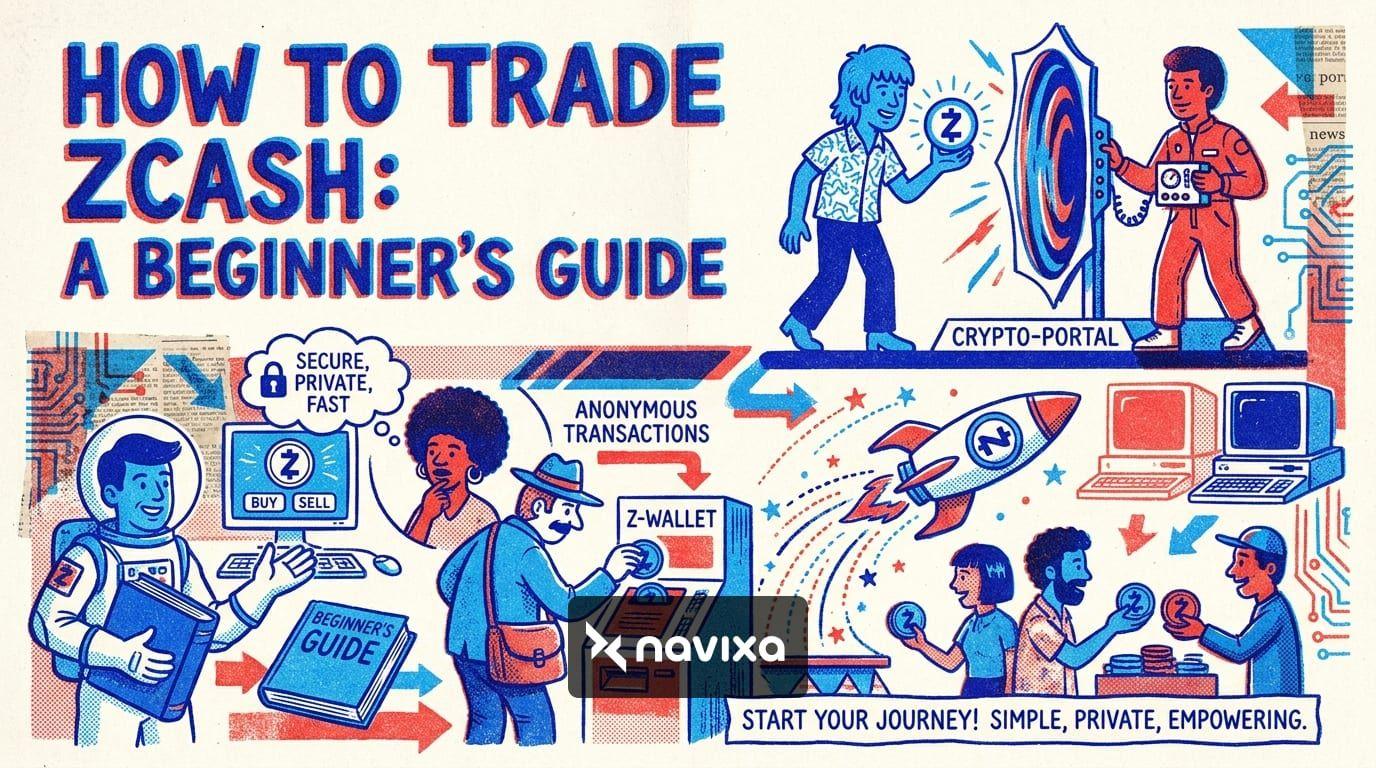
The global cryptocurrency market is currently navigating a highly dynamic phase. With Bitcoin holding strong above $80,000, Bitcoin dominance at a staggering 58.42%, and the total crypto market capitalization surpassing $2.75 trillion, investors are rapidly seeking out high-potential altcoins. Among the standout performers in this cycle is Zcash (ZEC), a privacy-preserving cryptocurrency that has surged in relevance, recently ranking among the top trending assets alongside heavyweights like Solana (SOL) and Binance Coin (BNB).
Trading privacy coins used to be a niche endeavor, strictly reserved for cypherpunks and deep-web enthusiasts. However, a massive regulatory shift and structural upgrades have thrust Zcash into the institutional spotlight. As financial surveillance concerns grow globally, ZEC has transformed into a legitimate portfolio diversifier.
If you are looking to capitalize on this volatility, understanding the unique mechanics of privacy assets is non-negotiable. This comprehensive guide will walk you through the fundamentals, technical strategies, and psychological nuances of trading Zcash successfully.
- Zcash utilizes zero-knowledge proofs (zk-SNARKs) to offer both transparent and shielded transaction options.
- Regulatory clarity and optional compliance features have separated Zcash from mandatory privacy coins, attracting institutional interest.
- Effective trading requires monitoring key support levels, which are typically driven by macroeconomic trends and broader crypto market momentum.
- Strict risk management is essential due to the lingering threat of exchange delistings in non-compliant global jurisdictions.

The Fundamentals: What Makes Zcash Unique?
Launched in 2016 by the Electric Coin Company, Zcash was built on the core framework of Bitcoin but with a critical enhancement: advanced cryptographic privacy. The underlying technology that makes Zcash function is known as zk-SNARKs (Zero-Knowledge Succinct Non-Interactive Argument of Knowledge). In simple terms, this mathematical breakthrough allows the network to verify that a transaction is valid without revealing the sender, the receiver, or the amount being transferred.
However, what truly makes Zcash a trader's favorite in modern regulatory environments is its dual-address model. Users can choose between two types of addresses when executing a transaction:
1. Transparent Addresses (t-addresses): These operate exactly like standard Bitcoin transactions. Everything is visible on the public blockchain, making them fully compliant with centralized exchanges and tax reporting software. 2. Shielded Addresses (z-addresses): These utilize zk-SNARKs to fully encrypt the transaction data, providing absolute financial privacy.
This optionality is the "Holy Grail" for Wall Street and institutional traders. It allows them to hold assets transparently for compliance purposes, while maintaining the ability to shield funds when interacting with decentralized applications.
Market Analysis & Trading Psychology
Trading Zcash requires a nuanced understanding of market sentiment, narrative rotation, and regulatory news cycles. The cryptocurrency market is heavily narrative-driven, and Zcash currently sits at the intersection of two major themes: data privacy and institutional adoption.
Unlike utility tokens or meme coins, privacy coins often trade inversely to global regulatory overreach. When governments discuss implementing central bank digital currencies (CBDCs) or tightening financial surveillance, the demand for shielded assets typically skyrockets. Consequently, a successful Zcash trader must develop a contrarian mindset. When fear dominates traditional markets, privacy infrastructure often sees outsized inflows.
It is important to remember that underlying asset metrics matter just as much as the prevailing narrative. Grasping these structural dynamics is essential, much like how traditional market participants must carefully evaluate Bitcoin value investing dynamics against legacy equities to accurately assess long-term intrinsic worth.
From a psychological standpoint, trading Zcash is an exercise in patience during accumulation phases and aggression during regulatory breakouts. For instance, when regulatory bodies issue favorable guidance—such as explicitly distinguishing optional privacy coins from mandatory ones—the market reacts violently. Traders who position themselves during periods of low volatility are the ones who capture these explosive, news-driven rallies.

Core Technical Strategies for Zcash
Navigating the day-to-day volatility of Zcash requires a robust technical framework. Due to its status as a mid-cap altcoin, ZEC is prone to aggressive swing patterns that respect classic technical analysis principles.
1. Trend Continuation and Moving Averages
One of the most reliable ways to trade Zcash is by utilizing simple moving averages (SMAs). In strong bull markets, ZEC often respects the 50-day and 200-day SMAs as dynamic support levels. When the price pulls back to these zones following a parabolic run, it frequently presents a high-probability entry point.
Traders who analyze key price action across multiple timeframes look for confirmation signals, such as bullish engulfing candles or hammer formations, before executing long positions at these critical moving averages.
2. Dollar-Cost Averaging (DCA) During Consolidation
For investors who believe in the long-term thesis of financial privacy but want to avoid the stress of timing precise bottoms, Dollar-Cost Averaging is the optimal approach. Because Zcash can endure long, sideways consolidation periods between major hype cycles, accumulating a position systematically ensures a lower average entry price. For those utilizing technical overlays, integrating a smart DCA strategy can help automate purchases specifically when momentum indicators reflect oversold conditions.
When trading Zcash, keep an eye on the "shielded pool" metrics. A rising percentage of ZEC entering shielded addresses often precedes supply shocks, as long-term holders lock up liquidity and remove it from active exchange circulation.
Zcash vs. Monero vs. Bitcoin: The Trader's Perspective
To trade Zcash effectively, you must understand how it stacks up against its primary competitors. While Bitcoin is the undisputed king of liquidity and Monero holds the crown for cypherpunk purity, Zcash carves out a highly specific, tradeable niche.
| Feature | Zcash (ZEC) | Monero (XMR) | Bitcoin (BTC) |
|---|---|---|---|
| Privacy Type | Optional (Transparent/Shielded) | Mandatory (Always Private) | Pseudonymous (Transparent) |
| Cryptography | zk-SNARKs | Ring Signatures & Stealth Addresses | SHA-256 Public Ledger |
| Regulatory Status | Widely Compliant (MiCA friendly) | High Delisting Risk | Universally Accepted |
| Primary Trading Driver | Regulatory approvals & Tech upgrades | Darknet utility & Pure privacy | Macroeconomics & Store of value |
As seen in the table above, Monero's mandatory privacy creates friction with centralized compliance frameworks, leading to frequent delistings. Zcash's optionality allows it to survive on major platforms like Coinbase and Gemini, ensuring higher liquidity for retail and institutional traders alike.

Step-by-Step: Executing Your First Zcash Trade
If you are ready to apply these concepts, follow these actionable steps to execute your first Zcash trade safely and efficiently.
Step 1: Choose a Compliant and Liquid Exchange
Because of the nuanced regulatory landscape, you should prioritize tier-one centralized exchanges that fully support Zcash’s transparent addresses. Platforms such as Binance, Kraken, and Coinbase generally offer deep order books and tight spreads, ensuring your trades are executed without severe slippage.
Step 2: Analyze Current Momentum and Volume
Before placing an order, review the current state of the global cryptocurrency market. Is Bitcoin trending upward? Are altcoins bleeding against Bitcoin dominance? Understanding market cycles is vital, much like how professionals focus on broad macroeconomic data when trading cloud tech momentum in traditional stock markets. Always check the 24-hour trading volume on aggregators like CoinGecko to ensure there is enough liquidity to absorb your position size.
Step 3: Utilize Limit Orders
Cryptocurrency markets are notorious for sudden flash crashes and explosive green candles. Never use a market order unless you are trading an incredibly small amount. Instead, set a Limit Order at a predetermined support level. This ensures you only buy Zcash at the price you are comfortable with, protecting you from algorithmic price manipulation.
Risk Management and the Delisting Threat
No cryptocurrency trade is without risk, and Zcash carries a unique set of vulnerabilities. The most prominent threat to ZEC traders is sudden regulatory action. Even with its optional privacy features, aggressive regulatory regimes in certain jurisdictions have forced local exchanges to delist all privacy-adjacent tokens.
When a delisting occurs, liquidity dries up instantly, and prices can plummet double-digit percentages in minutes. To mitigate this, traders must maintain strict stop-loss orders and avoid overallocating their portfolio into a single privacy asset.
Avoid storing large amounts of Zcash on centralized exchanges indefinitely. Due to evolving global regulations, exchange wallets can face sudden withdrawal restrictions. Always use a secure, self-custodial wallet for long-term holdings.

Conclusion
Trading Zcash offers a compelling opportunity for market participants who understand the intersection of cryptography, regulatory policy, and market psychology. By leveraging technical support levels, understanding the nuances of the zk-SNARK dual-address system, and practicing rigorous risk management, you can effectively navigate the volatility of the privacy coin sector.
Remember that the cryptocurrency landscape evolves rapidly. To stay ahead of the curve and consistently refine your edge in the market, start trading with Navixa to access advanced, data-driven trading strategies tailored for the modern digital asset ecosystem.
Frequently Asked Questions
Is Zcash entirely anonymous?
Zcash is not anonymous by default. It offers optional privacy. If you use a transparent address (t-address), your transaction is visible on the public blockchain just like Bitcoin. If you use a shielded address (z-address), the transaction details are encrypted and entirely private.
Why do some exchanges delist Zcash?
Despite its transparent address capabilities, some strict regulatory jurisdictions (like parts of Europe and Asia) view any privacy-preserving capability as a compliance risk regarding anti-money laundering (AML) laws. This pressure sometimes forces local exchanges to delist the asset.
Can Zcash be mined like Bitcoin?
Yes, Zcash operates on a Proof-of-Work (PoW) consensus mechanism. However, it uses a different mining algorithm called Equihash, which is designed to be ASIC-resistant, allowing miners with standard hardware to participate more fairly in securing the network.
What drives the price of Zcash?
Zcash’s price is heavily influenced by broader cryptocurrency market trends (especially Bitcoin's price action), regulatory news regarding privacy coins, institutional adoption, and updates to its core zk-SNARKs technology.