
Introduction
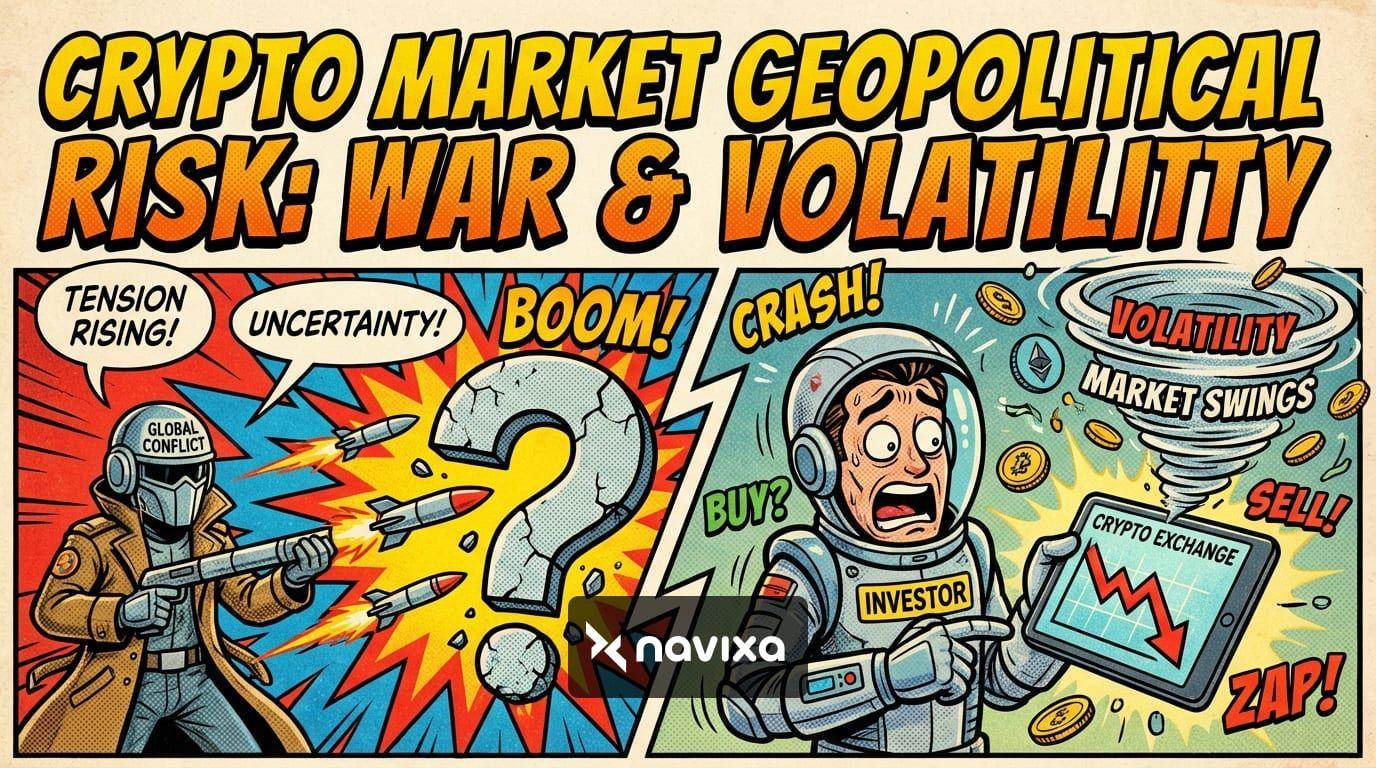
The intersection of global conflict and decentralized finance has created a complex landscape for modern investors. Historically, digital assets were viewed as isolated from traditional macroeconomic factors. However, as institutional adoption has matured, crypto market geopolitical risk has become a primary driver of volatility, liquidity crunches, and sudden price action.
When military conflicts escalate or international relations deteriorate, the shockwaves are instantly priced into global markets. Unlike traditional stock exchanges that close on weekends, cryptocurrency markets operate 24/7. This continuous trading environment makes digital assets the first responders to global crises. For instance, during the escalation of US-Iran tensions in early 2026, Bitcoin experienced an immediate shock before traditional markets even opened.
Understanding how geopolitical risk impacts the cryptocurrency ecosystem requires a deep dive into market psychology, institutional capital flows, and macroeconomic indicators. By analyzing recent conflicts, traders can develop robust strategies to protect their portfolios and capitalize on volatility.
The Dual Nature of Digital Assets During Conflict
During periods of geopolitical stress, Bitcoin and the broader crypto market exhibit a fascinating "split personality." They oscillate between behaving like high-beta tech stocks and decentralized safe-haven assets.
Initial Sell-Offs and the Risk-On Correlation
When a geopolitical shock hits the news wires, the initial market reaction is almost universally negative. In the first 24 to 48 hours of a crisis, uncertainty reigns supreme. Institutional algorithms and heavily leveraged retail traders often rush to liquidate risk-on assets, moving capital into cash, US Treasuries, or physical gold.
Because cryptocurrency markets never close, they absorb the brunt of the immediate panic. A stark example occurred in late February 2026, when conflict escalations in the Middle East caused Bitcoin to plummet from roughly $72,000 to $63,000 in a matter of hours, triggering over $300 million in liquidations. In these moments, Bitcoin trades purely as a correlated risk asset, moving in tandem with the Nasdaq and other equities.
The Digital Gold Narrative Re-emerges
Once the initial margin calls are flushed out of the system and panic subsides, the narrative often shifts. If a conflict threatens fiat currency stability, disrupts banking infrastructure, or weaponizes the traditional financial system, the fundamental value proposition of digital assets shines.
Bitcoin's censorship resistance, portability, and capped supply make it an attractive alternative when sovereign currencies are under siege. As the 2026 geopolitical landscape has shown, Bitcoin can decouple from equities shortly after a shock. Within ten days of the aforementioned February crash, Bitcoin rallied back near the $70,000 mark upon the emergence of peace signals, demonstrating remarkable resilience.
Key Drivers of Crypto Market Geopolitical Risk
To accurately assess crypto market geopolitical risk, traders must look beyond the immediate headlines and focus on the underlying economic drivers that wars and conflicts influence.
Energy Markets, Oil Prices, and Mining Economics
Geopolitical conflicts, particularly those in the Middle East, have a profound impact on global energy markets. Because Bitcoin mining is highly energy-intensive, any disruption to global oil and gas supplies directly affects the network's hash rate and miner profitability.
For example, tensions in the Strait of Hormuz—a crucial chokepoint where 20% of the world's crude oil passes—can send energy prices skyrocketing. Furthermore, localized infrastructure disruptions, such as the 2026 Qatar LNG attacks, have forced regional miners to shut down or relocate due to sudden energy shocks. When mining operations are squeezed by high energy costs, miners may be forced to sell their Bitcoin reserves to cover operational expenses, creating downward pressure on the spot market. Monitoring Reuters energy market updates is essential for crypto traders seeking to anticipate these supply-side shocks.
Institutional Inflows and Market Maturation
The structure of the cryptocurrency market has fundamentally changed with the advent of spot Bitcoin ETFs. In previous cycles, geopolitical fear would cause sustained bear markets. Today, institutional capital acts as a stabilizing force.
Despite severe geopolitical uncertainties throughout early 2026, including conflicts involving the Houthis and broader Middle Eastern instability, institutional funds have not abandoned digital assets. Spot Bitcoin ETFs recorded over $1 billion in net inflows during January and February 2026, even as the broader market faced immense volatility. This continuous institutional bid highlights that major players increasingly view Bitcoin as a long-term strategic reserve rather than a short-term speculative play.
"As a macro asset, Bitcoin continues to lead market risk sentiment shifts in a period defined by mixed economic growth, persistent inflation, and volatile geopolitical catalysts. The market feels less euphoric than prior cycles and structurally more complex."
Comparing Safe-Haven Assets During Geopolitical Crises
When assessing portfolio allocation during global conflicts, it is vital to compare digital assets against traditional safe havens.
| Asset Class | Liquidity During Crisis | Volatility Profile | Sovereign Risk Exposure |
|---|---|---|---|
| Bitcoin (BTC) | High (24/7 Trading) | Extreme | Zero (Decentralized) |
| Physical Gold | Moderate (Trading Hours) | Low to Moderate | Low |
| Equities | Moderate (Trading Hours) | Moderate to High | High |
| Fiat Currencies | High | Low (Except hyperinflation) | Extreme |
As the table illustrates, Bitcoin offers unparalleled liquidity and zero sovereign risk, but it requires traders to stomach extreme short-term volatility. Traditional gold remains less volatile but lacks the borderless transferability that digital gold provides.
Actionable Trading Strategies for Conflict-Driven Markets
Navigating crypto market geopolitical risk requires discipline, strict risk management, and an understanding of macroeconomic correlations. Here are proven strategies for trading during international crises.
The 48-Hour Wait-and-See Approach
One of the most reliable frameworks for trading geopolitical shocks is avoiding the initial chaos. During the first 48 hours of a conflict, markets are driven by pure emotion and algorithmic liquidations. Attempting to "catch a falling knife" during this window is highly perilous. Instead, traders should wait for the initial wave of margin calls to conclude. Once trading volumes stabilize and a clear floor is established, more calculated entry points present themselves.
Monitoring Oil as a Leading Indicator
Instead of reacting solely to breaking news headlines, astute crypto traders monitor commodity markets. Spikes in crude oil prices often precede broader market downturns because expensive energy fuels inflation, which in turn forces central banks to maintain restrictive, high-interest monetary policies. If a peace signal emerges—such as diplomatic negotiations—but oil prices remain elevated, the crypto market's recovery may be short-lived. Conversely, if oil prices drop sharply alongside de-escalation news, it often provides a strong bullish signal for digital assets.
Managing Leverage and Liquidation Risks
Geopolitical risk inherently spikes market volatility. A sudden military strike can cause a 10% to 15% flash crash in digital assets within minutes. Traders utilizing high leverage are particularly vulnerable during these black swan events. To survive conflict-driven markets, it is critical to reduce leverage, increase margin buffers, and utilize strict stop-loss orders. Shifting capital from perpetual futures contracts to spot holdings can also eliminate the risk of forced liquidation while maintaining exposure to potential upside. Keeping up with CoinDesk's macro analysis can provide timely insights into liquidity conditions.
Navigating Regulatory and Sovereign Risks
Beyond price volatility, geopolitical conflicts often accelerate regulatory shifts. Governments may impose strict capital controls or restrict access to cryptocurrency exchanges to prevent capital flight during wartime. Traders operating in geopolitically sensitive regions must consider the operational risks associated with centralized platforms. Utilizing decentralized exchanges (DEXs) and self-custodial hardware wallets ensures that assets remain accessible even if local governments attempt to sever access to the global banking system.
Conclusion
As digital assets become deeply integrated into the global financial system, crypto market geopolitical risk is now a permanent fixture of the trading landscape. The events of early 2026 have proven that while Bitcoin is highly susceptible to initial panic sell-offs, its underlying institutional support and safe-haven narratives foster remarkable resilience.
By understanding the dual nature of digital assets, monitoring energy markets as leading indicators, and applying patient, risk-averse trading strategies, investors can successfully navigate the turbulence of war and global instability. Ultimately, periods of peak geopolitical fear often present the most asymmetric opportunities for those who remain rational and prepared.
Frequently Asked Questions
What is crypto market geopolitical risk?
Crypto market geopolitical risk refers to the threat of global conflicts, wars, trade disputes, and international diplomatic crises negatively impacting the value and volatility of cryptocurrencies. It encompasses how these macro events influence investor sentiment, liquidity, and regulatory actions within the digital asset space.
How does war affect the price of Bitcoin?
Historically, the outbreak of war triggers an initial, sharp sell-off in Bitcoin as investors panic and rush to liquidate risk-on assets. However, once the initial shock subsides, Bitcoin often rebounds. Its borderless, censorship-resistant nature makes it attractive during times when traditional banking systems or local fiat currencies are compromised.
Why do cryptocurrencies drop when conflicts first break out?
Cryptocurrencies drop initially because institutional algorithms and frightened retail investors tend to group digital assets with high-risk equities. During sudden crises, there is a "dash for cash" or traditional safe havens like US Treasuries, causing massive sell-offs and triggering cascading liquidations in the heavily leveraged crypto derivatives market.
Are digital assets considered safe havens during international crises?
The classification of digital assets as safe havens is nuanced. In the immediate aftermath of a shock, they behave like volatile risk assets. Over a longer timeframe, however, Bitcoin acts as "digital gold," offering protection against fiat currency devaluation and central bank overreach, making it a viable long-term safe haven.
How should traders adjust their portfolios during global instability?
During global instability, traders should reduce leverage to avoid flash crash liquidations, delay new entries until the initial 48-hour panic subsides, and monitor leading macroeconomic indicators like oil prices. Shifting focus from speculative altcoins to established assets like Bitcoin can also minimize downside exposure.