
The Dawn of a New Forecasting Era
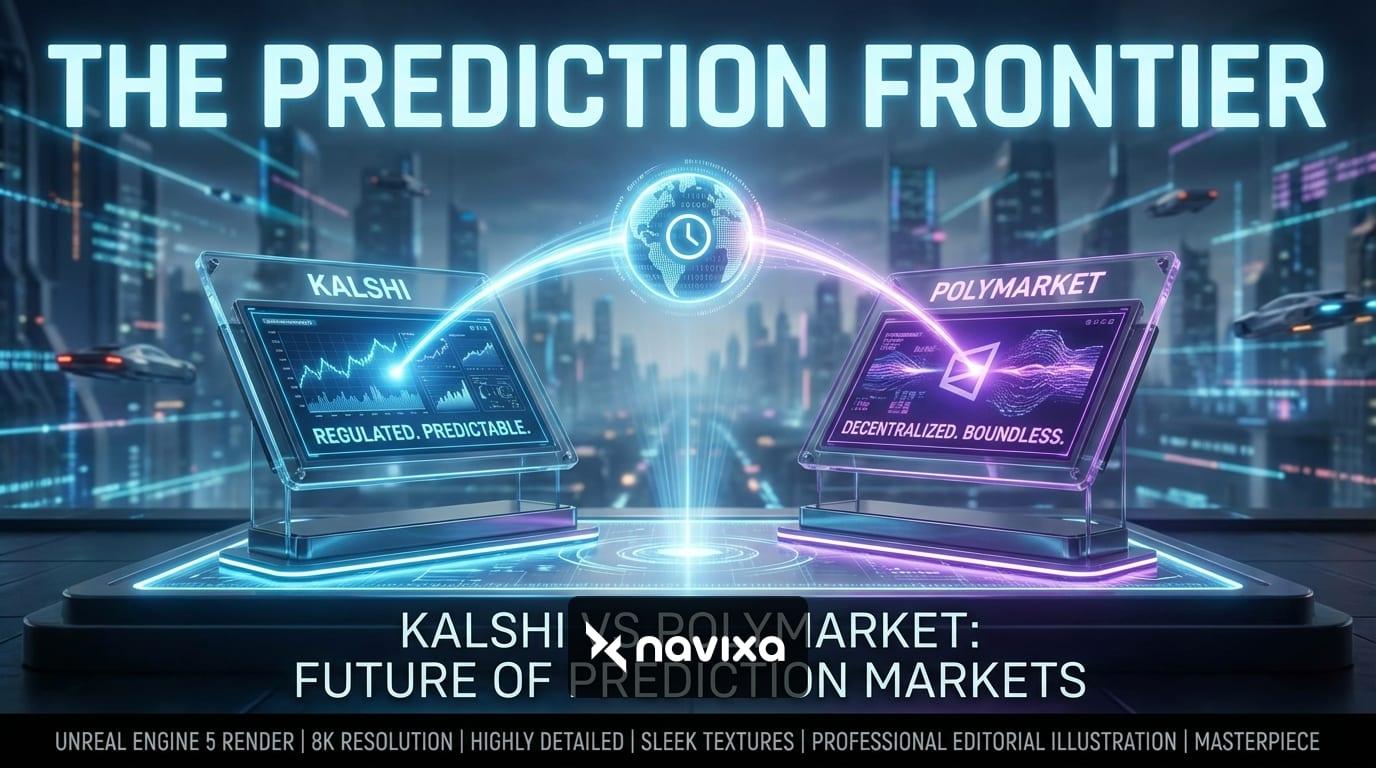
Prediction markets have fundamentally shifted how traders, institutions, and the general public interact with future events. Instead of relying purely on punditry or qualitative forecasts, market participants can now observe real-time, financially incentivized probabilities. At the epicenter of this financial revolution is the great debate: Kalshi vs Polymarket. Both platforms have emerged as titans in the event contract space, but they operate on fundamentally different architectures, regulatory frameworks, and market philosophies.
Whether you are a seasoned quantitative trader, a cryptocurrency enthusiast, or a retail investor looking to hedge against macroeconomic volatility, choosing the right platform is critical. This comprehensive guide explores the intricacies of both exchanges, offering deep technical analysis, trading strategies, and actionable steps to help you navigate the future of prediction markets.
The Evolution of Event Contracts
The concept of betting on outcomes is not new, but the financialization of these events into standardized, tradable contracts has reached unprecedented heights. By allowing users to buy "Yes" or "No" shares on specific outcomes, prediction markets create an order book where the price of a share (ranging from $0.01 to $0.99) directly correlates to the market's perceived probability of that event occurring.
"Prediction markets are the ultimate truth-seeking engines, leveraging financial incentives to aggregate decentralized knowledge and cut through market noise."
Recently, the industry has seen an explosive surge in participation. For instance, Polymarket surpassed $7 billion in monthly trading volume in February 2026, setting a staggering daily record of $425 million on February 28. Concurrently, Kalshi processed an impressive $9.8 billion in trading volume during the same month, largely driven by its massive integration with traditional retail brokerages.
This growth has been catalyzed by a more favorable regulatory environment. In early 2026, the Commodity Futures Trading Commission (CFTC) under Chairman Michael Selig took a strong pro-innovation stance, withdrawing prior proposals that sought to restrict political and sports-related event contracts. This pivotal regulatory shift has cleared the runway for massive institutional and retail adoption.
Kalshi: The Regulated Fiat Juggernaut
Kalshi was built from the ground up with a singular mission: to become the first fully regulated Designated Contract Market (DCM) for event contracts in the United States.
Regulatory Moat and Institutional Appeal
Kalshi's biggest advantage in the Kalshi vs Polymarket rivalry is its unyielding commitment to legal compliance. Because it operates under the direct oversight of the CFTC, Kalshi provides a legally secure environment for U.S. citizens to trade contracts on economics, weather, politics, and sports. While traditional sportsbooks face a fragmented, state-by-state regulatory patchwork, Kalshi has leveraged federal commodities laws to offer its markets nationwide, though it still navigates ongoing legal nuances in certain states.
The Robinhood Catalyst
One of Kalshi's most transformative milestones was its strategic integration with Robinhood. By tapping into a user base of over 24 million funded retail accounts, Kalshi eliminated the friction of onboarding, seamlessly delivering prediction markets to everyday investors. This massive influx of retail liquidity has resulted in exceptionally tight spreads on major US-centric events, making Kalshi an absolute powerhouse for domestic trading.
Funding and Architecture
Kalshi operates entirely on traditional fiat rails. Users deposit US Dollars (USD) via bank transfers, ACH, or Apple Pay. This traditional financial architecture is highly appealing to institutional investors and retail traders who prefer to avoid the complexities and volatility associated with cryptocurrency wallets.
Polymarket: The Global Crypto Powerhouse
In stark contrast to Kalshi's traditional Wall Street approach, Polymarket is a decentralized, crypto-native platform built on the Polygon blockchain.
Unmatched Global Liquidity
Polymarket has historically been the go-to platform for international traders and crypto-savvy users. Because it operates via smart contracts and settles trades in USDC (a dollar-pegged stablecoin), Polymarket offers frictionless global access, 24/7 trading, and near-instantaneous market creation. When breaking news hits, Polymarket is often the first platform to launch a tradable contract, capturing the immediate speculative premium.
The U.S. Market Re-entry
For years, Polymarket faced restrictions in the U.S. market. However, in late 2025, Polymarket strategically acquired the CFTC-licensed exchange QCEX for $112 million, paving the way for a compliant, phased rollout to American users. This aggressive move signals Polymarket's ambition to compete directly with Kalshi on US soil while maintaining its dominant global crypto infrastructure.
Kalshi vs Polymarket: Head-to-Head Comparison
To truly understand the Kalshi vs Polymarket dynamic, we must evaluate them across several critical dimensions. The following comparison highlights the core architectural and operational differences between the two giants.
| Feature | Kalshi | Polymarket |
|---|---|---|
| Regulatory Status | Fully CFTC-Regulated DCM (U.S.) | Global / U.S. phased rollout via QCEX |
| Native Asset | US Dollar (Fiat) | USDC Stablecoin (Crypto) |
| Primary Markets | U.S. Sports, Economics, Federal Policy | Global Politics, Crypto, Tech, Pop Culture |
| Fee Structure | $0.01 - $0.07 per contract | Competitive taker fees / 2% on winning positions |
| User Base | Heavy U.S. Retail & Robinhood Integration | Global Crypto-Natives & Information Arbitrageurs |
Analyzing the Fee Structures
Fees are the silent killer of profitability in high-frequency trading. Kalshi employs a transparent, volume-tiered fee structure, typically charging between $0.01 and $0.07 per contract. This predictable cost is excellent for traders managing large positions on high-probability outcomes.
Polymarket's fee structure has evolved, currently featuring a mix of competitive taker fees (around 10 basis points) and a 2% cut on winning positions in certain markets. While Polymarket boasts zero maker fees, the tax on winners can be regressive for highly accurate, high-volume traders. Understanding these mechanics is vital for optimizing your net returns.
Trading Strategy & Technical Analysis
Succeeding in prediction markets requires an entirely different toolkit than traditional equity trading. Here are advanced strategies to capitalize on the differences between Kalshi and Polymarket.
Cross-Platform Arbitrage
Arbitrage is the holy grail of trading, and the Kalshi vs Polymarket dichotomy creates fertile ground for it. Because the two platforms cater to vastly different demographics—Kalshi to U.S. retail and Polymarket to global crypto natives—their pricing on overlapping events can temporarily diverge.
If the probability of the Federal Reserve cutting interest rates is priced at $0.62 on Polymarket and $0.58 on Kalshi, a trader can simultaneously buy "No" on Polymarket (at $0.38) and "Yes" on Kalshi (at $0.58). The combined cost is $0.96. Regardless of the outcome, the trader receives a $1.00 payout, locking in a risk-free 4-cent spread minus trading fees. While these spreads have compressed to 1-2% on major events due to algorithmic bots, they frequently widen during high-volatility news events.
News-Driven Momentum Trading
Prediction markets are hyper-sensitive to information. In equity markets, insider trading is illegal; in prediction markets, information asymmetry is the core driver of alpha.
Traders must employ algorithmic news scrapers or maintain extreme vigilance over raw data feeds. Polymarket, with its crypto-native speed, typically reacts to international geopolitical news faster. Conversely, Kalshi's order books often see massive retail volume injections during U.S. economic data releases (like CPI prints or Non-Farm Payrolls). Positioning yourself ahead of these known catalyst events and fading the retail overreaction is a highly profitable strategy.
Order Book Dynamics and Liquidity Pools
Technical analysis in prediction markets involves reading the depth of the order book rather than charting moving averages. A "wall" of limit orders at the $0.50 mark often acts as psychological resistance. Furthermore, you must assess liquidity before entering a trade. Kalshi's Robinhood integration means U.S. sports and political markets have deep liquidity, allowing for large position sizing without moving the price. On Polymarket, niche crypto and tech markets offer higher volatility but may suffer from slippage if you attempt to execute a massive market order.
Actionable Steps & Risk Management
Trading event contracts is essentially trading binary options. The payout is binary—either $1 or $0. This "all-or-nothing" dynamic requires immaculate risk management protocols.
1. Implement Strict Position Sizing
Never allocate more than 1-2% of your total trading capital into a single event contract. Because a $0.90 contract can instantly plummet to $0 on a single tweet or news alert, the risk of total loss is substantially higher than holding a traditional stock.
2. Understand Correlation Risk
Many traders unknowingly overexpose themselves to the same underlying variables. For example, betting "Yes" on an interest rate cut and "Yes" on an economic recession are highly correlated trades. If the economy surges and rates remain high, both positions will simultaneously go to zero. Map out the dependencies of your contracts to ensure true portfolio diversification.
3. Avoid Narrative FOMO
Retail traders frequently fall victim to the Fear Of Missing Out (FOMO), driving contract prices to irrational extremes. If a contract is priced at $0.95 (implying a 95% probability), you are risking $0.95 to make a mere $0.05 profit. Unless you possess guaranteed insider knowledge, the risk-to-reward ratio at these extremes is mathematically disastrous. Often, the sharp money is found in fading the public sentiment when probabilities breach the 85% threshold without definitive mathematical backing.
Practical Takeaways
* Choose based on your infrastructure: Use Kalshi if you prefer USD bank transfers, regulated U.S. oversight, and tight spreads on domestic events. Use Polymarket if you are comfortable with Web3 wallets, USDC stablecoins, and seek global market exposure. * Mind the fees: Always calculate the break-even point considering Kalshi's per-contract fees versus Polymarket's winner tax or taker fees. * Hunt for arbitrage: Monitor overlapping markets closely. Discrepancies between the retail-heavy Kalshi and crypto-native Polymarket offer low-risk yield opportunities. * Master the news cycle: Speed is your greatest asset. Build a trading setup that alerts you to breaking macroeconomic and geopolitical news before the broader market reacts.
Frequently Asked Questions
Are prediction markets like Kalshi and Polymarket legal in the US?
Yes, but under different frameworks. Kalshi is fully regulated by the CFTC as a Designated Contract Market, making it federally legal for U.S. residents, though state-level nuances still exist. Polymarket historically operated offshore but acquired the CFTC-licensed exchange QCEX in 2025 to offer a regulated, phased rollout for U.S. users.
What are the main differences in the fees between the two platforms?
Kalshi utilizes a transparent fee structure charging between $0.01 and $0.07 per contract based on volume tiers. Polymarket relies on a mix of a low taker fee (around 0.10%) and, in some instances, a 2% fee on winning positions, which can impact highly accurate traders differently.
How do I fund my accounts on these platforms?
Kalshi integrates directly with traditional banking, allowing you to fund your account using US Dollars via ACH, bank wire, or Apple Pay. Polymarket operates on the Polygon blockchain, meaning you must connect a digital wallet (like MetaMask) and fund your account using USDC, a dollar-pegged stablecoin.
Can I make a living trading prediction markets?
While highly skilled quantitative traders do generate significant profits through arbitrage, algorithmic news-trading, and statistical modeling, prediction markets carry extreme risks. The binary nature of the contracts means total capital loss on a trade is common. It requires rigorous risk management and should only represent a portion of a diversified trading portfolio.
Conclusion
The Kalshi vs Polymarket rivalry is driving the prediction market industry into a golden era of liquidity, transparency, and accessibility. Kalshi offers the ultimate peace of mind with its CFTC-regulated, USD-native infrastructure and unparalleled retail distribution. Meanwhile, Polymarket remains the undisputed king of decentralized speed, global access, and crypto-native efficiency.
Ultimately, the future of prediction markets isn't a zero-sum game. The most successful traders will leverage both platforms, exploiting their unique fee structures, liquidity pools, and pricing disparities. If you are ready to stop guessing and start trading on the truth, open an account on both platforms, map your arbitrage strategies, and step into the data-driven future of event forecasting.